Hoy, con cerca de 100 organizaciones de la sociedad civil y más de 1.500 firmantes que apoyan su acción estratégica, la Coalición Pro Acceso sigue trabajando para construir una cultura de transparencia en España, de modo que las autoridades garanticen el acceso a la información pública y la participación de la ciudadanía en la toma de decisiones.

El derecho de acceso a la información es un derecho fundamental de toda persona


Rápido: La información debe ser entregada inmediatamente o dentro un plazo de 15 días hábiles. Sólo en casos excepcionales, cuando la solicitud sea complicada y siempre con notificación al solicitante, la entidad pública podrá ampliar este plazo otros 10 días hábiles. El plazo sólo podrá ampliarse una vez.
Gratuito: El acceso a la información debe ser gratuito. Los solicitantes tendrán el derecho de consultar documentos que contengan la información buscada y/o a recibir información por correo electrónico de forma gratuita. Sólo se podrá cobrar una tasa al solicitante si se solicita copias de documentos. La tasa no podrá exceder el coste real en el que incurra la autoridad pública, que deberá ser, en todo caso, razonable y no exceder el coste real en el que incurra la autoridad pública. De la misma manera, cuando se trate de información que se entregue en otros formatos (como CD, cintas de audio y/o vídeo, etc.) se podrá cobrar únicamente el coste del soporte.


Todos los ciudadanos tienen el derecho a saber cómo se toman las decisiones dentro de cualquier administración pública y cómo se gasta el dinero de los contribuyentes. La mejor herramienta para garantizar el pleno reconocimiento y ejercicio de este derecho es la existencia de una ley específica de acceso a la información.
Conoce las demandas de la Coalición Pro Acceso para el Gobierno de España


























































Manuel Sánchez de Diego,
Profesor de Derecho de la Información de la Universidad Complutense de Madrid.
Severiano Fernández Ramos,
Profesor de Derecho Administrativo de la Universidad de Cádiz.
José Manuel Alonso,
Responsable de eGovernment en W3C, de la Fundación CTIC.
Antonio Rubio Campaña,
Director Máster en Periodismo de Investigación, Datos y Visualización de EL MUNDO/Universidad Rey Juan Carlos.
José Luis Dader García,
Catedrádico de Periodismo en la Universidad Complutense de Madrid.
Javier de la Cueva,
Abogado.
Dra. Laura Tejedor Fuentes,
Profesora periodismo de datos y transparencia, Universidad Complutense de Madrid.
Y más de 1500 firmantes. Descúbrelos aquí.
La Coalición Pro Acceso está abierta a nuevas incorporaciones. Los miembros fundadores desempeñan el papel de comité director, no obstante, otras ONG y individuos pueden adherirse a la Coalición como forma de demostrar su apoyo y participar en las acciones a favor de una mayor transparencia de la administración pública.
Infórmate de todas las iniciativas y campañas de la Coalición, escribiendo a coalicion[at]proacceso.org

Sobre la ley de transparencia
En una verdadera democracia sólo es posible una auténtica participación por parte de la ciudadanía si ésta puede acceder en igualdad de condiciones a todo tipo de información que se encuentre en poder de cualquier autoridad pública o de cualquier entidad privada que realice funciones públicas. La mejor herramienta para garantizar el pleno reconocimiento y ejercicio de este derecho es la existencia de una ley específica de acceso a la información.
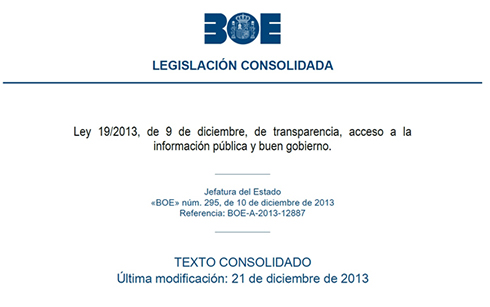
En España, la Ley de Transparencia, Acceso a la Información y Buen Gobierno entró en vigor el pasado 10 de diciembre de 2014.